

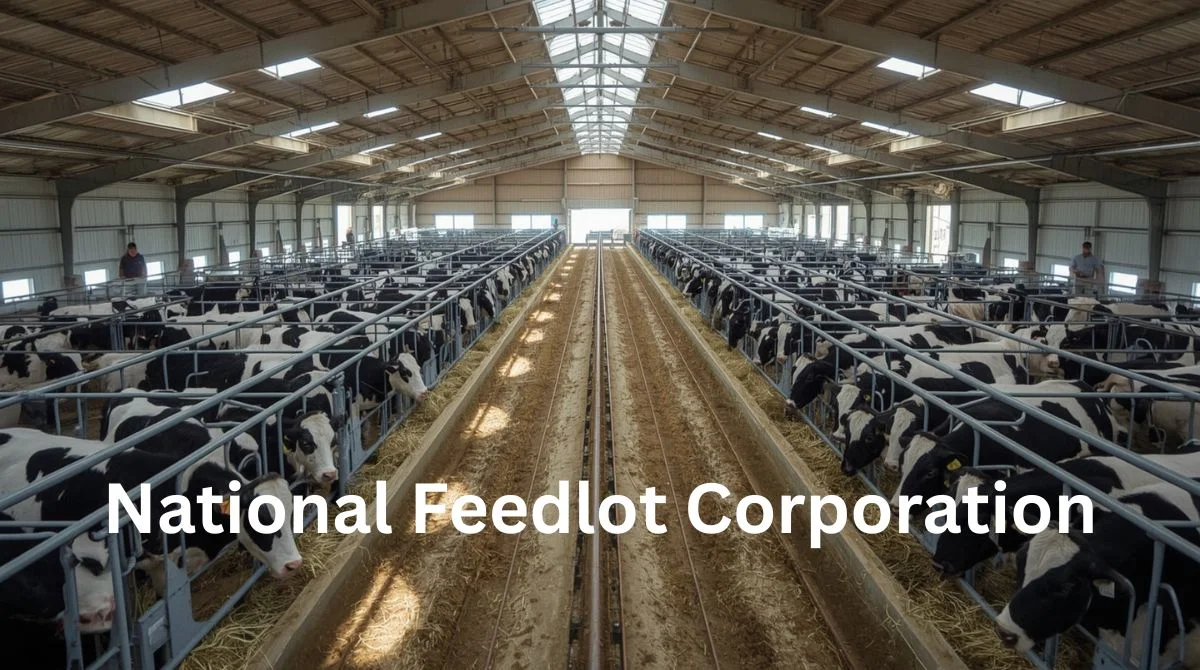
The livestock sector continues to evolve as global demand for safe, affordable, and high-quality meat rises. In many developing countries, feedlot systems play a major role in improving productivity and strengthening food security. Among the key industry players, the National Feedlot Corporation stands out for its role in advancing modern livestock practices, improving supply chains, and supporting both farmers and national meat production goals.
What Is the National Feedlot Corporation?
The National Feedlot Corporation is an organization created to improve feedlot operations and support the livestock sector through modern, efficient, and scalable systems. It focuses on building structured meat production models that enhance food quality, reduce dependence on imports, and promote sustainable agriculture.
Feedlot operations involve growing cattle, buffalo, or other livestock in controlled environments where they receive balanced feed for rapid, healthy weight gain. The corporation ensures that these systems follow national standards, hygiene rules, and international best practices.
The organization provides training, infrastructure, and guidance to farmers. It also helps stabilize the beef market, increase local production, and strengthen the national food supply network.
Why Feedlot Systems Matter for Livestock Growth?
Feedlot systems have become essential to modern livestock production because they provide consistent and efficient cattle growth. Farmers gain predictable output, healthier animals, and better feed conversion.
Here are the main reasons feedlots matter:
-
Faster weight gain: Animals reach market weight sooner due to nutrient-rich rations.
-
Better quality meat: Controlled diets improve tenderness and flavor.
-
Lower mortality rates: Improved health monitoring reduces disease.
-
Higher profits: Farmers can plan production cycles for stable pricing.
-
Efficient land use: Feedlots reduce the need for large grazing areas.
With rising global meat demand, feedlot systems improve both supply and sustainability. This is why organizations like the National Feedlot Corporation play a crucial role in supporting the industry.
Role of the National Feedlot Corporation in Livestock Development
The National Feedlot Corporation supports livestock growth through structured programs, quality standards, and capacity building. Its primary goals include:
1. Improving Feed Production and Quality
A major responsibility of the corporation is to provide technical support for balanced feed formulation. High-quality feed improves livestock weight gain and reduces production costs.
The corporation works with nutritionists, veterinarians, and feed manufacturers to create:
-
Protein-rich ration formulas
-
Mineral and vitamin supplements
-
Safe feed storage systems
-
Cost-effective feeding strategies
Better feed quality results in healthier animals and increased production efficiency.
2. Strengthening Farmer Training and Skill Development
Many small and medium-scale farmers struggle with modern feedlot practices, hygiene management, and record-keeping. The corporation addresses this gap through training.
Training programs include:
-
Feeding strategies for different breeds
-
Proper housing and ventilation
-
Animal health management
-
Weight tracking and production planning
-
Waste management techniques
By teaching practical skills, the National Feedlot Corporation increases farm productivity and reduces risks.
3. Enhancing Supply Chain Efficiency
Efficient supply chains improve product flow from farm to market. The corporation ensures that livestock produced in feedlots enter the distribution system smoothly.
It focuses on:
-
Transport coordination
-
Reducing market fluctuations
-
Ensuring fair pricing models
-
Supporting meat processing facilities
-
Linking farmers with buyers and retailers
These efforts help stabilize the livestock market and support national food affordability.
4. Promoting Animal Health and Welfare
Healthy livestock ensures quality meat. The corporation promotes animal welfare standards and veterinary care, including:
-
Vaccination schedules
-
Disease monitoring
-
Biosecurity measures
-
Stress-free housing systems
These measures reduce losses and improve national herd quality.
How the National Feedlot Corporation Supports Farmers?
Farmers benefit the most from the corporation’s programs. The organization offers tools, training, and financial support that help them improve performance.
Financial Assistance and Credit Support
Many farmers face financial challenges when shifting to structured feedlots. The corporation helps them access:
-
Low-interest loans
-
Government grants
-
Farm expansion incentives
-
Equipment financing options
These financial schemes reduce the burden on farmers and encourage adoption of modern systems.
Technology and Innovation Support
Technology drives progress in modern agriculture. The corporation encourages farmers to use:
-
Automated feeding systems
-
Electronic weight monitoring
-
Data-driven performance tracking
-
Energy-efficient barn equipment
Innovation improves efficiency and reduces waste.
Market Access and Stability
The corporation provides market support by connecting farmers with:
-
Slaughterhouses
-
Wholesalers
-
Retail chains
-
Export opportunities
Such structured access ensures stable income for feedlot farmers.
Impact of The National Feedlot Corporation on National Food Security
Food security is a national priority. The corporation strengthens the meat supply chain by improving local production and reducing reliance on imports.
Increasing Local Meat Production
Feedlot systems ensure fast and efficient meat production. The corporation’s programs help increase yearly output while maintaining quality.
Ensuring Meat Safety and Quality Standards
Food safety is essential for public health. The organization promotes hygiene and testing at each production stage.
Reducing Dependence on Imports
Countries often import meat when local production is insufficient. By strengthening domestic feedlot systems, the corporation reduces import costs and supports national self-sufficiency.
Challenges Faced by the National Feedlot Corporation
Like any large organization, the corporation faces challenges that impact its efficiency and public perception.
1. Funding and Resource Limitations
Feedlot development requires major capital investment. Budget limitations can slow down expansion and training programs.
2. Fluctuating Feed Costs
Feed accounts for the highest cost in livestock production. Price volatility affects farmers and the corporation’s programs.
3. Climate and Environmental Concerns
Extreme weather conditions influence feed availability, water supply, and animal comfort. The corporation works to create climate-resilient systems.
4. Mismanagement or Operational Delays
Large organizations sometimes face administrative issues. These delays reduce program effectiveness and create gaps in service delivery.
Sustainable Practices Encouraged by the National Feedlot Corporation
Sustainability is the future of livestock production. The corporation promotes practices that protect the environment and ensure long-term growth.
Eco-Friendly Feed Formulation
Using crop residues, agro-waste, and nutrient-dense alternatives helps reduce feed costs and environmental impact.
Water Conservation Systems
The corporation encourages practices like:
-
Rainwater harvesting
-
Efficient drinking systems
-
Recycled water for cleaning
Waste Management and Recycling
Waste from livestock can be converted into:
-
Organic fertilizers
-
Biogas
-
Soil-conditioners
This reduces pollution and creates extra income for farmers.
Carbon Footprint Reduction
Feedlot systems can reduce carbon emissions when managed properly. The corporation supports renewable energy solutions like solar-powered barns.
Future of Livestock Industry With Support From the National Feedlot Corporation
The livestock industry is evolving fast. New technologies, rising population, and food safety demands create an urgent need for efficient systems.
The National Feedlot Corporation is expected to lead innovation through:
-
Smart farm automation
-
Precision feeding technologies
-
Genetic improvement programs
-
Blockchain-based traceability
-
Digital farm advisory apps
These advancements will strengthen national food systems and support millions of farmers.
Comparison of Traditional vs. Feedlot Systems
Below is a simple table showing how modern feedlot systems compare to traditional livestock management:
| Factor | Traditional System | Feedlot System |
|---|---|---|
| Growth Speed | Slow | Fast |
| Feed Control | Low | High |
| Land Requirement | High | Low |
| Meat Consistency | Variable | Uniform |
| Market Output | Unpredictable | Stable |
How the National Feedlot Corporation Strengthens the Beef Value Chain
The beef value chain includes breeders, feedlot owners, processors, distributors, and retailers. The corporation ensures smooth coordination across all steps.
Supporting Breeders
It helps improve animal genetics and breeding performance.
Helping Feedlot Owners
It provides technical guidance, disease control support, and funding options.
Enhancing Processing Facilities
It ensures meat processing units follow hygiene and safety standards.
Connecting Retailers and Consumers
The corporation supports transparent systems that build customer trust and ensure fair market prices.
Benefits of the National Feedlot Corporation for the Economy
Job Creation
Feedlot farms, transport, processing, marketing, and feed production create thousands of jobs.
Rural Development
Training and investments boost rural income and infrastructure.
Stable Meat Prices
Efficient production helps reduce price fluctuations in the national market.
Export Opportunities
Improved livestock quality allows countries to enter global markets.
Conclusion
The National Feedlot Corporation plays a major role in strengthening the livestock sector. Its efforts help farmers, stabilize the beef market, and support national food security. By promoting modern feedlot systems, the organization ensures faster growth, better meat quality, and long-term sustainability.