

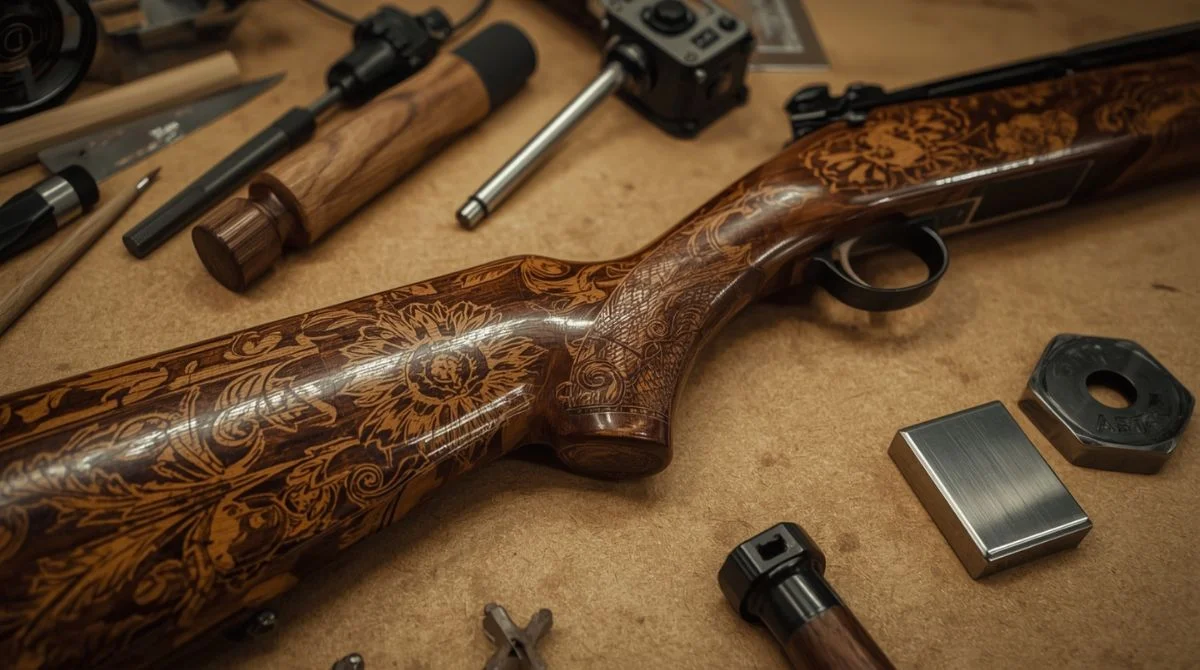
In today’s financial and manufacturing world, the term etched stock appears in various industries, including firearms, metalworking, and investment-related products. Understanding what etched stock is, its benefits, and its practical uses is crucial for investors, hobbyists, and professionals alike.
What Is Etched Stock?
Etched stock refers to a material commonly wood, metal, or synthetic that has undergone a precise chemical or mechanical etching process. This process creates intricate designs, patterns, or textures on the surface of the stock. In firearms and craftsmanship, etched stock often features artistic patterns that are engraved or chemically treated for durability and aesthetics.
In financial contexts, the term “stock” may also relate to investments or commodity holdings with etched or marked attributes indicating authenticity or origin. Understanding the context is key to fully grasping the concept.
The Etching Process Explained
Etching involves using chemicals, lasers, or mechanical tools to carve or engrave patterns on a material. Here’s a breakdown of the process:
-
Surface Preparation
The stock is cleaned and polished to remove dust, dirt, or irregularities. -
Masking or Stenciling
A protective layer or stencil is applied to guide the etching pattern. -
Etching
The material undergoes chemical or mechanical treatment. For metals, acids or laser engraving is common. For wood or synthetic stocks, precise laser cutting or hand etching is often used. -
Finishing
After etching, the stock is polished, stained, or coated to enhance durability and visual appeal.
Common Types of Etched Stock
Etched stock is not limited to one material or use. Understanding the types helps you select the right kind for your project.
1. Wooden Etched Stock
-
Common in firearms, rifles, or decorative crafts.
-
Provides a natural, high-quality aesthetic.
-
Often used for collectible firearms and luxury items.
2. Metal Etched Stock
-
Usually stainless steel, aluminum, or brass.
-
Found in industrial components, firearms, and tools.
-
Provides durability and corrosion resistance.
3. Synthetic Etched Stock
-
Made from polymers or composite materials.
-
Lightweight, weather-resistant, and versatile.
-
Used in modern firearms, gadgets, or decorative products.
Benefits of Etched Stock
Etched stock offers a variety of advantages, making it popular in multiple industries.
1. Enhanced Aesthetics
Etching adds intricate designs and textures to stock surfaces. This improves the appearance of firearms, tools, or decorative items, making them visually appealing and unique.
2. Improved Grip and Handling
Some etching patterns are functional, providing a textured surface that improves grip. This is especially useful for firearms and hand tools.
3. Durability and Resistance
Chemical and mechanical etching can enhance surface strength and resistance to wear and tear. Etched stock is less prone to scratches or damage compared to unetched surfaces.
4. Personalization
Etched stock allows for customized designs, including logos, initials, or artistic patterns. This makes the product personal and valuable for collectors.
5. Investment Value
In collectible markets, firearms, or luxury tools, etched stock can increase resale or investment value due to its rarity and craftsmanship.
Applications of Etched Stock
The versatility of etched stock makes it useful in multiple domains:
1. Firearms and Hunting Equipment
-
Etched wooden or metal stock enhances aesthetic appeal.
-
Custom etching can add personal or commemorative designs.
-
Improves grip and handling during use.
2. Industrial and Technical Tools
-
Etched metal stock on tools provides durability.
-
Surface textures prevent slippage and improve functionality.
-
Adds markings or guides for precision work.
3. Collectibles and Luxury Items
-
Etched stock is widely used in high-end pens, knives, and other collectibles.
-
Custom patterns enhance uniqueness and value.
4. Decorative Crafts
-
Artists use etched wooden or metal stock for sculptures and ornaments.
-
Patterns created through etching are precise and long-lasting.
5. Investment and Financial Markets
-
Etched stock can refer to physical commodity stocks that carry authenticated markings.
-
Helps investors identify genuine products and track value.
| Benefit | Use Case | Industry |
|---|---|---|
| Enhanced aesthetics | Collectible firearms | Firearms & Luxury Goods |
| Improved grip | Hand tools and rifles | Industrial & Hunting |
| Durability | Metal stocks | Manufacturing & Technical Tools |
| Personalization | Custom engravings | Gifts & Collectibles |
| Investment value | Marked stock products | Finance & Collectibles |
Etched Stock in Firearms: Why It’s Popular
In the firearms industry, etched stock is highly valued. Traditional wooden stocks may crack or wear over time, but etching improves longevity and adds a unique touch. Popular features include:
-
Floral or geometric engravings
-
Monograms or logos
-
Limited edition designs
-
Functional grip-enhancing textures
Collectors often seek firearms with etched stock because these pieces are considered works of art as well as functional tools.
Choosing the Right Etched Stock
Selecting the right etched stock depends on your needs:
-
For Aesthetics: Choose wooden or metal etched stock with custom designs.
-
For Durability: Opt for metal or synthetic etched stock.
-
For Functionality: Look for etched stock with grip-enhancing patterns.
-
For Collectibility: Limited editions with artistic engraving increase value.
Maintenance of Etched Stock
Maintaining etched stock ensures longevity and preserves its appearance:
-
Cleaning: Use soft cloths and mild cleaning solutions. Avoid harsh chemicals.
-
Polishing: Apply wax or oil for wooden stock; use metal polish for metallic stock.
-
Storage: Keep away from extreme heat, moisture, or direct sunlight.
-
Handling: Avoid dropping or scraping etched stock surfaces.
Proper maintenance ensures the designs remain intact and the stock retains its value over time.
Etched Stock in Modern Technology
Modern applications of etched stock extend beyond traditional industries:
-
Laser Etching: High precision lasers create complex patterns quickly.
-
3D Printing: Some synthetic stocks are etched during printing for functional and decorative patterns.
-
Smart Devices: Etched textures improve grip on phones, tablets, and other gadgets.
These innovations expand the potential uses of etched stock across technology and lifestyle products.
Why Etched Stock Adds Value?
Etched stock adds tangible and intangible value:
-
Craftsmanship: Reflects high skill and attention to detail.
-
Exclusivity: Custom designs make each item unique.
-
Functionality: Textured surfaces improve handling.
-
Durability: Chemical or laser etching strengthens the surface.
-
Market Demand: Collectors and enthusiasts are willing to pay premium prices.
For both personal use and investment, etched stock provides a blend of beauty, utility, and value.
Future of Etched Stock
The future of etched stock includes:
-
Advanced laser and chemical etching techniques for higher precision
-
Integration with smart devices and IoT technology
-
Eco-friendly materials and sustainable manufacturing
-
Increased automation for cost-effective production
-
New designs combining functionality and art
As industries innovate, etched stock will continue to evolve, making it more desirable in both practical and collectible markets.
Final Thoughts
Etched stock is more than just a decorative feature; it combines functionality, aesthetics, and value. Whether used in firearms, collectibles, industrial tools, or modern technology, etched stock enhances appearance, durability, and grip. With ongoing innovations, the popularity of etched stock will continue to grow, offering both professionals and collectors practical and investment benefits.