

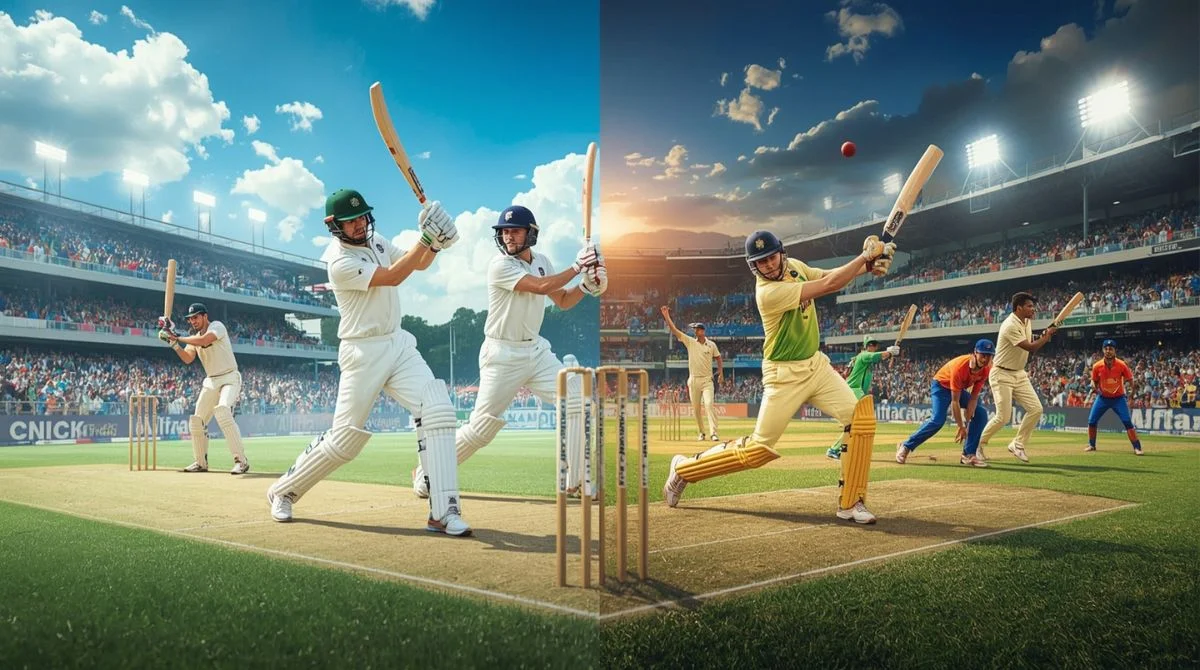
Cricket is more than a sport it’s a global phenomenon that has evolved dramatically over centuries. From the long, strategic Test matches to the fast-paced, thrilling T20 games, cricket has transformed to suit changing audiences, technologies, and lifestyles.
The Origins of Cricket
Cricket originated in England during the 16th century as a rural pastime. It gradually became more organized and spread to the British colonies, including India, Australia, and the Caribbean.
Key early features:
-
Played with wooden bats and leather balls
-
Informal matches in villages
-
Rules varied by region
-
Early matches could last for days
By the 18th century, cricket had gained national recognition, leading to standardized rules and the foundation of modern cricket.
Introduction of Test Cricket
Test cricket is the oldest and most traditional format of the game. It officially began in 1877 with the first Test match played between England and Australia in Melbourne.
Characteristics of Test cricket:
-
Played over five days
-
Two innings per team
-
Focus on strategy, endurance, and technique
-
Requires patience and mental strength
Test cricket is revered for its depth, skill, and sportsmanship. Legends like Sir Donald Bradman, Sachin Tendulkar, and Shane Warne built their reputations in this format.
The Rise of One-Day Internationals (ODIs)
By the 1970s, cricket needed to attract more spectators and television audiences. The result was the One-Day International (ODI) format, which condensed the game into a single day.
Key features of ODIs:
-
Limited to 50 overs per side
-
Faster pace than Test cricket
-
More aggressive batting strategies
-
Popularized colored clothing and day-night matches
ODIs brought cricket to a broader audience and gave rise to international tournaments like the Cricket World Cup, first held in 1975. ODI cricket allowed more dramatic finishes, keeping fans on the edge of their seats.
Introduction of T20 Cricket
In 2003, Twenty20 (T20) cricket was introduced in England. This format revolutionized the sport with a fast, exciting, and entertainment-focused approach.
Features of T20 cricket:
-
20 overs per side
-
Games last approximately 3 hours
-
Power-hitting and aggressive strategies dominate
-
Designed for TV audiences and stadium crowds
T20 made cricket accessible to younger audiences and helped globalize the sport. Leagues like the Indian Premier League (IPL), Big Bash League (BBL), and Caribbean Premier League (CPL) became hugely popular, attracting international stars and massive fan engagement.
Comparison of Cricket Formats
| Format | Overs | Duration | Focus | Audience Appeal |
|---|---|---|---|---|
| Test Cricket | Unlimited | 5 days | Technique & strategy | Traditional fans, purists |
| ODI Cricket | 50 | 1 day | Balanced aggression | Broad international audience |
| T20 Cricket | 20 | 3 hours | Power-hitting & speed | Younger fans, entertainment-focused |
Each format offers a unique experience, and fans enjoy switching between them depending on their preference for strategy, speed, or excitement.
Impact of Technology on Modern Cricket
Modern cricket has evolved alongside technology. Innovations have improved fairness, accuracy, and fan engagement.
Notable changes include:
-
DRS (Decision Review System) for precise umpire decisions
-
Hawk-Eye for ball tracking and LBW calls
-
LED stumps for instant dismissals
-
Advanced statistics for teams and fans
Technology has not only modernized the game but also enhanced the viewing experience, making cricket more exciting for global audiences.
Globalization of Cricket
Cricket is no longer confined to traditional strongholds. With T20 leagues, ICC events, and online streaming, the sport has reached new markets.
-
Countries like the USA, UAE, and Canada are developing cricket programs
-
T20 leagues attract international players and sponsors
-
Social media and online platforms engage younger fans
Globalization ensures that cricket continues to evolve and stay relevant in a competitive sports landscape.
Famous Cricket Leagues That Shaped Modern Cricket
Several leagues have revolutionized cricket and influenced how the game is played today:
1. Indian Premier League (IPL)
-
Started in 2008
-
Franchise-based T20 league
-
Attracts global stars
-
Huge commercial and fan impact
2. Big Bash League (BBL)
-
Australian T20 league
-
Family-friendly, fast-paced matches
-
Introduced innovative rules for entertainment
3. Caribbean Premier League (CPL)
-
Vibrant T20 league in the Caribbean
-
Known for entertainment, music, and local talent
These leagues have made cricket more exciting, commercial, and accessible, while giving players and fans more exposure to different styles.
How Cricket Strategies Evolved?
Cricket strategy has changed with formats:
-
Test Matches: Focus on endurance, long innings, and field placements
-
ODIs: Balance between defense and aggressive batting, managing limited overs
-
T20s: Risk-taking, big-hitting, innovative bowling variations, and strategic timeouts
Players must adapt to each format, making modern cricket more dynamic and versatile.
Women’s Cricket Evolve
Women’s cricket has grown tremendously alongside men’s cricket. Key developments include:
-
ICC Women’s World Cup tournaments
-
Expansion of women’s T20 leagues
-
Increasing sponsorships and media coverage
-
Recognition of female cricket stars globally
Women’s cricket contributes significantly to the evolution and popularity of the sport worldwide.
The Future of Cricket
Cricket continues to evolve, and its future looks promising. Trends include:
-
Shorter, fan-friendly formats like The Hundred
-
More global leagues and tournaments
-
Enhanced digital engagement via apps and streaming
-
Adoption of AI and analytics for player performance
-
Expansion into non-traditional cricketing countries
Cricket is adapting to modern entertainment and technology demands while keeping its rich history alive.
Conclusion
The evolution of cricket from Test matches to T20 shows how a traditional sport can adapt to changing audiences and technologies. Each format has its unique charm—Test cricket for purists, ODIs for balanced entertainment, and T20 for thrill-seekers.
With technology, globalization, and fan engagement shaping its path, cricket is set to remain one of the most beloved and evolving sports in the world. Whether you’re a seasoned fan or a newcomer, the game’s history and future are equally exciting.